Pest control services in Lubbock establishes definitive structural protection against wood-destroying organisms, invasive insects, and health-threatening rodents throughout Ouachita Parish. Property owners confronting sudden indoor insect trails or nesting activity near the Ouachita River require systematic elimination protocols rather than superficial aerosol masking.

Pest control services in Lubbock is a specialized structural inspection, targeted extermination, and perimeter barrier application protocol designed to eliminate active insect and rodent colonies while securing residential and commercial foundations against recurring infestation.
Every service reflects the same meticulous attention to detail, whether it's a single job or a larger pest control services project across Lubbock.
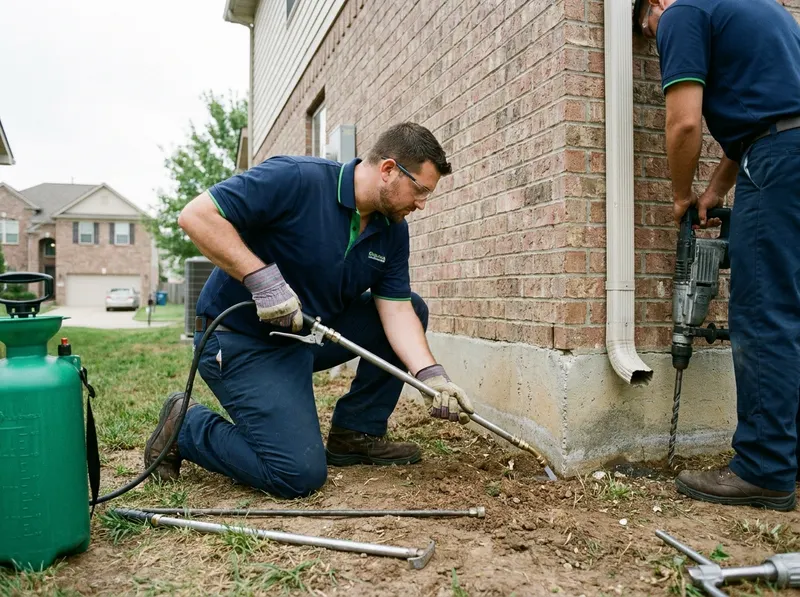
Subterranean termites nest underground and construct mud shelter tubes over concrete stem walls to consume internal wood framing. Liquid termiticide trenching creates an uninterrupted, non-repellent chemical envelope directly into the soil along structural footings. When worker termites travel through treated soil to reach timber, they ingest and transfer the active ingredient throughout the sub-surface colony, triggering complete colony collapse within 60 to 90 days. Technicians drill continuous masonry slabs, patios, and expansion joints to guarantee a continuous subterranean barrier around the entire architectural perimeter. Soil injection rods deliver termiticide deep along foundation footers at a calibrated rate of 4 gallons per 10 linear feet per foot of depth, saturating the subterranean travel routes that termites exploit beneath ground-level slabs. Masonry drill holes are countersunk through tile or concrete floor junctions and patched with color-matched hydraulic cement to restore cosmetic integrity while maintaining an impenetrable subterranean chemical barrier.
Get a quote →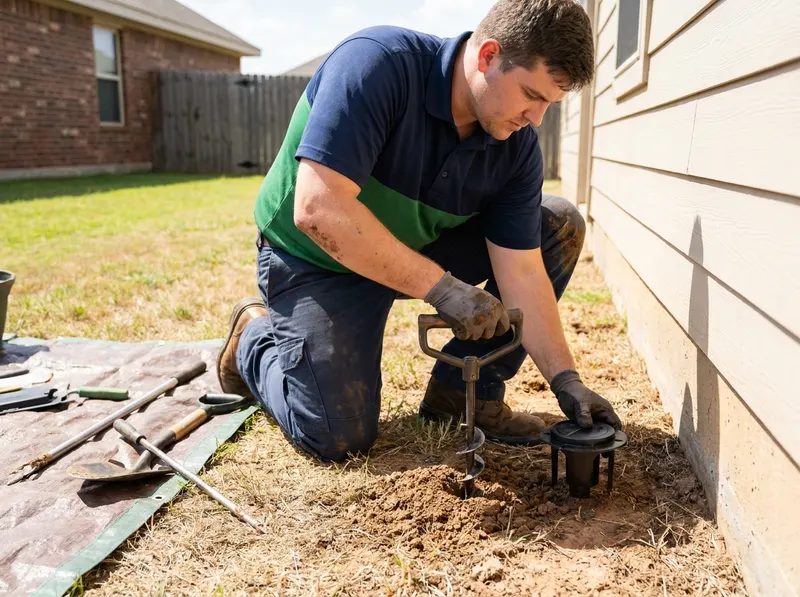
Hexaflumuron or noviflumuron baiting systems provide proactive subterranean termite interception without invasive trenching through decorative concrete flatwork. Stations are cored into turf and soil beds at precise 10-foot to 15-foot intervals around building driplines. Cellulose monitoring matrices intercept foraging termites, which feed on insect growth regulators that halt the production of chitin, arresting molting cycles and neutralizing queens. Ongoing diagnostic readings document bait consumption percentages to verify zero subterranean termite pressure against structural sill plates. Bait cartridges utilize high-density purified cellulose matrix impregnated with slow-acting chitin synthesis inhibitors, ensuring worker termites return to their subterranean nests to distribute active ingredients across all nursery castes. Technicians inspect these tamper-resistant perimeter stations on scheduled quarterly or semi-annual maintenance intervals, checking for subterranean feeding activity, clearing accumulated silt or root intrusions, and replacing consumed cartridges to guarantee continuous exterior protection against structural attack.
Get a quote →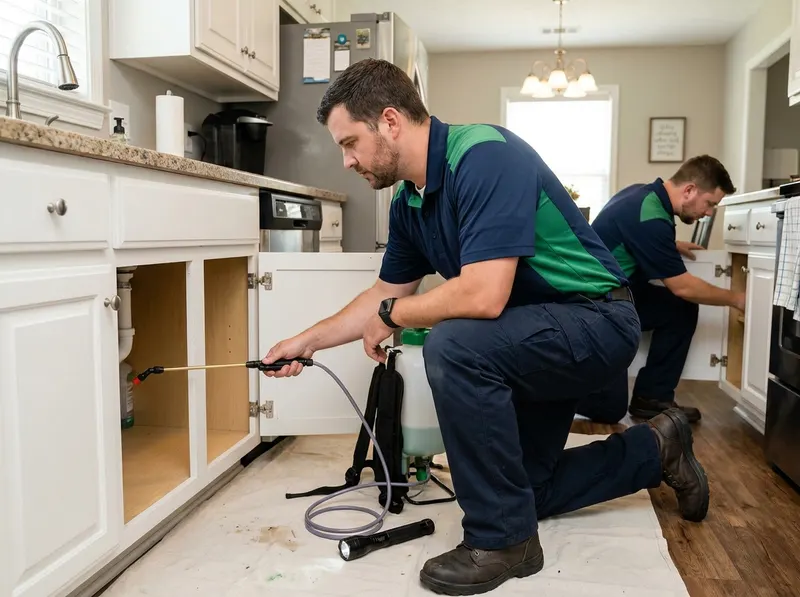
German cockroach populations multiply inside kitchen cabinetry, mechanical appliance voids, and baseboard junctions, posing severe enteric bacterial risks across food-handling zones. Cleanout protocol incorporates target-specific non-repellent pyrethroid-free microencapsulated sprays paired with synthetic juvenile insect growth regulators that disrupt reproductive cycles. Technicians insert gel baits containing indoxacarb or hydramethylnon into deep electronic housing voids, eliminating hidden nymphs through horizontal secondary transfer while preventing airborne chemical exposure in living quarters. High-precision bait delivery guns deposit exact, pinhead-sized micro-beads of moisture-rich matrix into hidden hinges, drawer slides, motor housings, and sink undersides where roaches nest during daylight hours. Residual insect growth regulators like pyriproxyfen cause emerging nymphs to develop twisted, non-functional wings and sterile reproductive organs, effectively breaking the exponential reproductive cycle within 14 to 21 days. Follow-up evaluations verify absolute population mortality through non-chemical sticky monitor placements and thorough crack-and-crevice re-examinations.
Get a quote →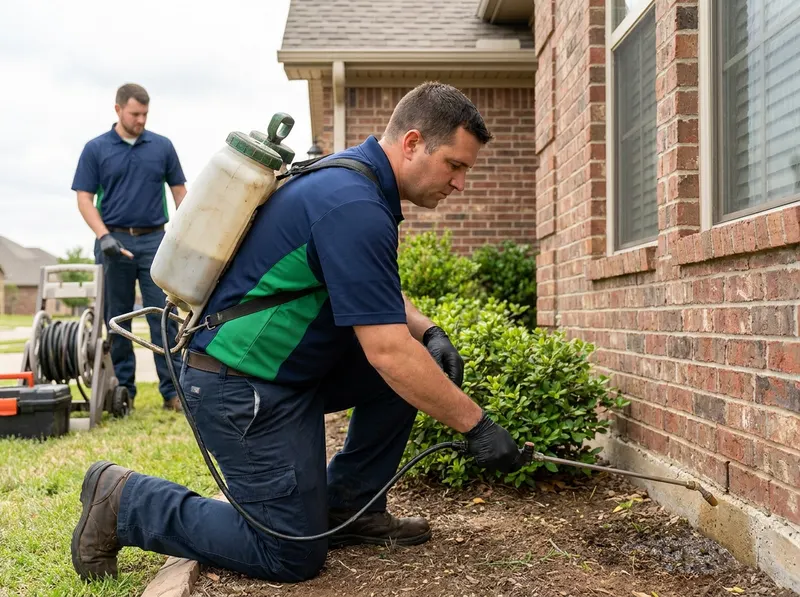
Large peridomestic roaches breed in dense landscape mulch, storm drains, and moist crawlspace soil before invading living quarters through plumbing penetrations and weatherstripping voids. Exterior perimeter defense halts perimeter migration by applying water-resistant microencapsulated suspensions 3 feet up exterior masonry walls and 6 feet out across foundation mulch beds. Granular macro-baits placed in sub-grade weep screeds, crawlspace vents, and water-meter boxes stop adults before structural entry occurs. These heavy-bodied insects thrive in sub-tropical moisture pockets and frequently exploit damaged garage-door weatherstripping, crawlspace access hatches, and exterior plumbing hose bibs. Specialized broad-spectrum synthetic pyrethroids bound in polymer capsules withstand direct sunlight, high humidity, and overhead irrigation, maintaining active contact lethality for up to 90 days. Foundation weep holes are backed with fine copper mesh or tailored weep vent inserts, physically denying roaches mechanical entry into wall cavities while chemical barrier treatments neutralize foraging individuals crawling over exterior sill plates.
Get a quote →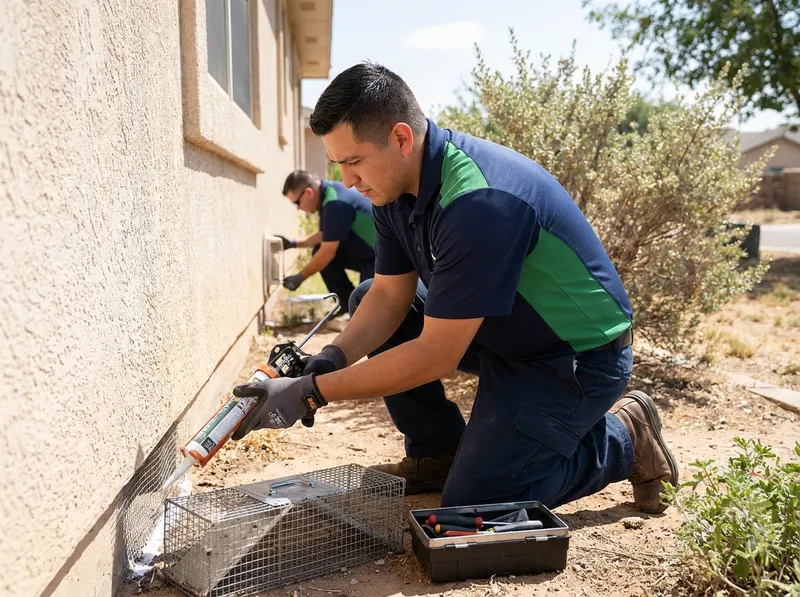
Norway rats, roof rats, and house mice exploit openings as small as 1/4 inch along rooflines, soffits, AC chase lines, and crawlspace vents to contaminate insulation and gnaw electrical wiring. Remediation begins with high-density snap trap placement within attic and crawlspace pathways to extract the resident population within 72 hours. Technicians simultaneously install 1/4-inch heavy galvanized hardware cloth, elastomeric silicone sealant, and steel-mesh backer rods into every structural opening to permanently seal entry routes. Technicians chart indoor runway paths using UV fluorescent tracking powders, establishing the exact entry portals rodents use between subfloor crawlspaces and ceiling attics. Snapping mechanisms and tamper-resistant stations are checked on strict 48-hour rotations to remove carcasses promptly, preventing secondary odors, blow fly infestations, and parasite abandonment. Structural exclusion repairs include bolting steel flashing along roof-eave intersections, packing structural brick weep holes with woven stainless steel mesh, and securing crawlspace door frames with heavy heavy-gauge galvanized metal thresholds.
Get a quote →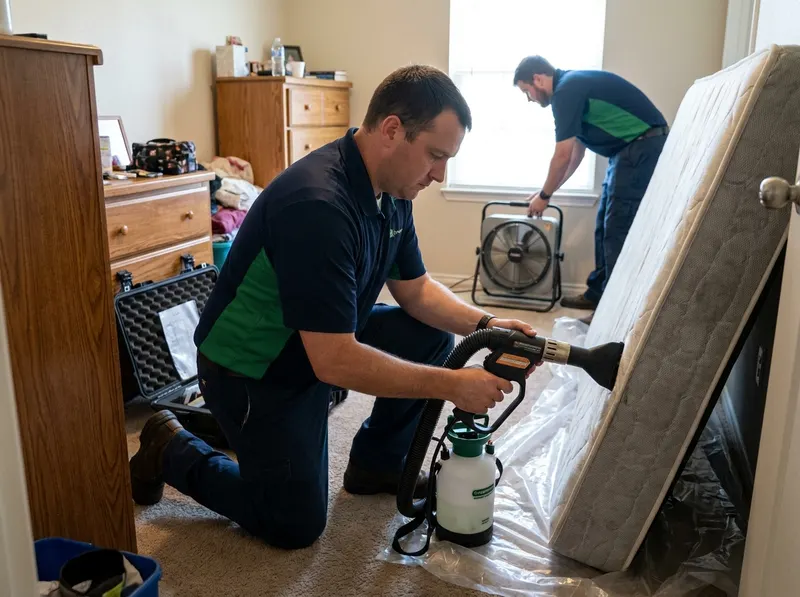
Cimex lectularius infestations embed deep into mattress tufts, bed frame screw holes, hollow furniture legs, and electrical faceplate boxes, resisting standard retail aerosols. Eradication combines high-pressure localized dry steam generating over 200°F with long-residual dual-mode insecticidal sprays and desiccant dusts. Applying amorphous silica dust inside wall voids dehydrates adult bed bugs, while contact agents stop emerging first-instar nymphs, achieving complete mortality across all life stages within two verified operational visits. Dry thermal steam instantly coagulates egg proteins and kills adult insects on contact without saturating mattresses or upholstery with excess liquid moisture. Precision micro-dusters introduce electrostatically charged amorphous silica into electrical outlets, baseboard voids, and hollow furniture framing, stripping the protective waxy epicuticle layer from bed bugs and inducing fatal dehydration within 24 hours. Pre-treatment protocols mandate stripping linens and laundering at temperatures above 120°F, followed by rigorous post-treatment inspections using high-lumen inspection lights and mattress encasement installations.
Get a quote →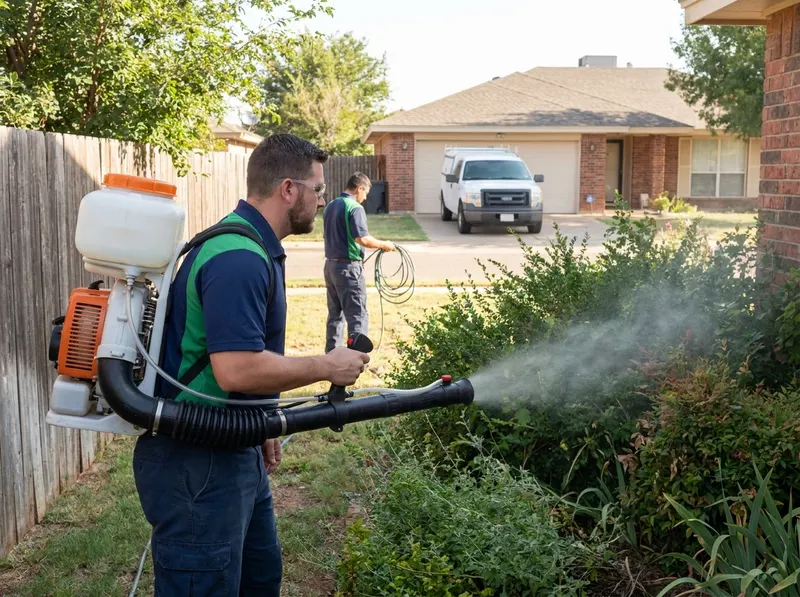
Standing water zones, river basin moisture, and shaded foliage encourage intense Aedes and Culex mosquito proliferation from April through September. Suppression operations utilize motorized backpack misters to apply micro-droplet residual suspensions targeting the undersides of dense ornamental foliage, deck undercrofts, and shaded foundation perimeters where resting adults harbor. Microbial larvicides (Bacillus thuringiensis israelensis) are simultaneously introduced into gutters, retention swales, and ornamental ponds to neutralize aquatic larvae before adult flight. Motorized mist blowers atomize concentrated microencapsulated solutions into a fine 50-micron droplet spray that binds to broadleaf plants, shrubbery canopies, and shaded soffits, resisting sudden rain wash-off for up to 30 days. Specialized slow-release larvicide briquettes dissolve gradually in low-lying surface depressions, storm drains, and bird baths, releasing biological toxins that target mosquito larvae digestive tracts without causing harm to aquatic plants, fish, birds, or domestic mammals.
Get a quote →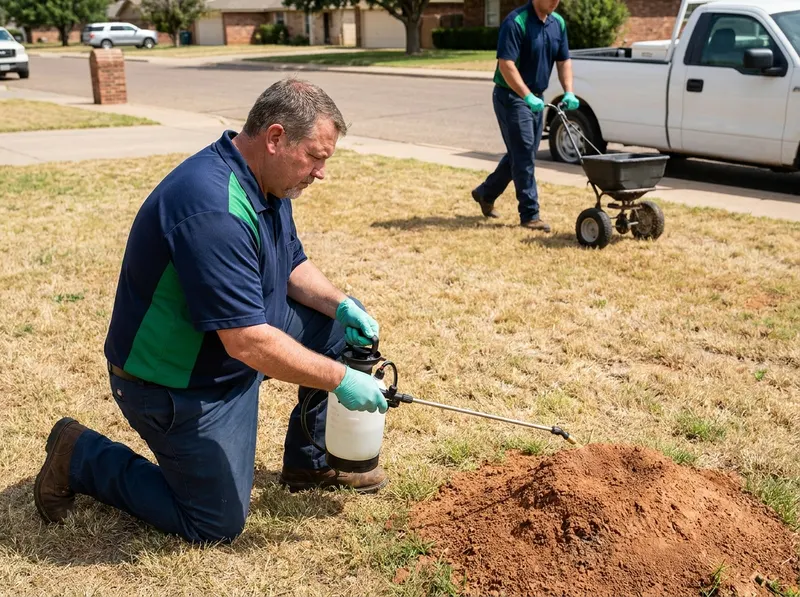
Red imported fire ants establish aggressive multi-queen colonies that undermine turf roots, damage HVAC contactor switches, and deliver painful alkaloid stings to children and pets. Eradication pairs slow-acting fipronil- or abamectin-based corn-grit food baits broadcast across the yard with high-volume pressurized insecticidal drenches over active central mounds. Foraging workers transport food bait into the lower galleries, neutralizing reproductive queens and completely clearing residential lawns within 7 to 14 days. Broadcast applications distribute low-dose active bait across the entire lawn footprint, taking advantage of worker foraging behavior without causing immediate alarm or triggering satellite mound budding. Central high-mound structures located near air conditioning units, patios, or pathways are flooded with pressurized non-repellent drench solutions delivering 2 to 3 gallons of liquid deep into subterranean nesting chambers, terminating the queen and deep brood chambers within 24 hours. Annual turf barrier treatments prevent newly mated queens from re-establishing footholds during summer nuptial flights.
Get a quote →You get a firm, itemized quote for your pest control services before any work begins, no surprises, no pressure.
Careful prep, tidy work, and a full cleanup when we are done. We treat your home and belongings like our own.
The same trusted, background-checked team from the first call to the final check.
Selecting structural pest defense requires matching treatment intensity to the biological life cycle of the invading organism. If you want immediate knockdown of visible indoor foraging lines such as scouting odorous house ants or pantry beetles, choose focused localized baiting and crack-and-crevice spot applications. If you want lasting colony eradication for subterranean termites, German cockroaches, or Norway rats, choose comprehensive non-repellent liquid soil barriers and dual-action insect growth regulator treatments.
The trade-off is procedural scope: focused spot treatments resolve acute surface nuisances for minimal upfront investment starting at $150, but fail to intercept underground root nests, hidden wall-void colonies, or perimeter re-entry vectors that require systematic quarterly perimeter defense. For heavy perimeter migrations driven by saturated outdoor soil, selecting an exterior-only power spray barrier stops pests before they enter living quarters without introducing chemicals inside bedrooms or food preparation areas. Conversely, an established interior infestation of German roaches or bed bugs requires intense interior preparation, void dusting, and localized microencapsulation alongside exterior defense, requiring higher initial technician labor and broader chemical investments.
Mechanical exclusion packages trade upfront carpentry and masonry sealing expenses for permanent physical protection against gnawing rodents, bypassing the ongoing chemical replenishment cycles of toxic bait stations. Property managers evaluating long-term budgets must weigh recurring quarterly maintenance contracts against one-time reactive emergency cleanouts; scheduled quarterly visits consistently lower annualized repair costs by intercepting wood decay, insulation fouling, and wiring damage before structural deterioration occurs.
Every project gets a firm, written price after a free on-site visit. Ranges below for orientation.
Tell us about your pest control services job and we'll send a clear, written quote, usually the same day. Or just call and talk to a real Lubbock pro.
(225) 497-0153
Properties throughout Ouachita Parish encounter intense moisture and pest pressure driven by proximity to the Ouachita River and Black Bayou Lake National Wildlife Refuge. High humidity and expansive clay soils along the Garden District, Lakeshore, and Chauvin foster massive subterranean termite colonies, demanding deep structural liquid trenching and perimeter barriers. Fluctuating water tables around Bawcomville and Swartz accelerate rodent and peridomestic cockroach migrations directly toward residential subfloors, making rapid structural sealing and perimeter defense essential across local foundations. The unique microclimate created by seasonal flooding along the Ouachita River basin causes widespread soil saturation, forcing subterranean termites to construct elevated shelter tubes directly up brick foundations, pier-and-beam supports, and crawlspace footings. Historic structures located near Forsythe Park and downtown commercial buildings feature aging masonry joints, porous mortar, and original heart-pine framing that require non-destructive borate treatments and targeted sub-slab termiticide injections to prevent irreparable structural loss. Dense residential subdivisions bordering the University of Louisiana at Monroe experience severe summer mosquito swarms and aggressive red imported fire ant colonies that colonize fine alluvial silt soils, requiring continuous chemical barriers and biological larvicide distribution to maintain usable outdoor living spaces. Furthermore, older warehouse facilities and industrial distribution routes spanning U.S. Route 165 and Interstate 20 face continuous indoor rodent and cockroach pressures as heavy commercial freight traffic travels into the region. Property managers in Claiborne and Brownsville must address structural settlement gaps caused by the seasonal shrink-swell cycles of local clay beds, which frequently crack exterior stucco or concrete stem walls and provide immediate, unobstructed entry corridors for foraging rodent lines and carpenter ant scouts.
Free estimates for Lubbock & the surrounding area.
 Draxora Pest Care