Subterranean termites cause significant structural destruction across Ouachita Parish due to sustained moisture levels near the Ouachita River and alluvial soil conditions. Properties across Downtown Monroe, the Garden…
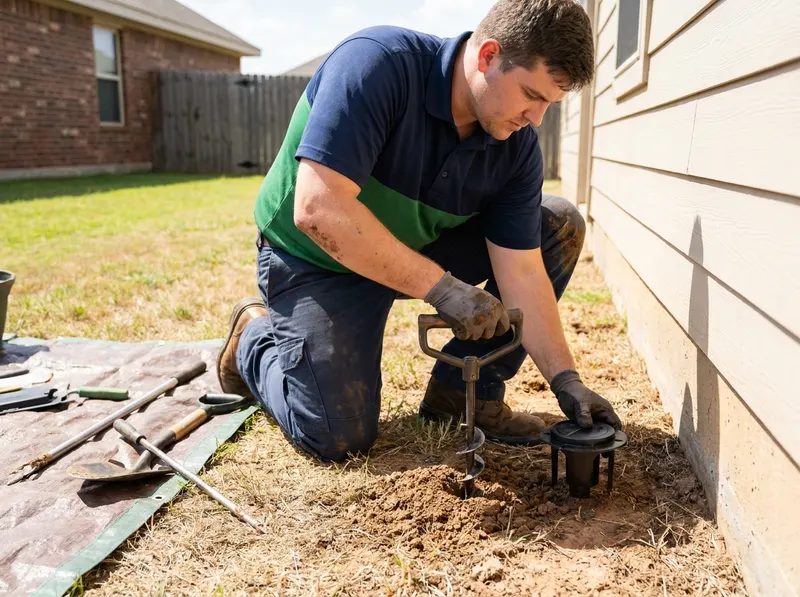
Subterranean termites cause significant structural destruction across Ouachita Parish due to sustained moisture levels near the Ouachita River and alluvial soil conditions. Properties across Downtown Monroe, the Garden District, and Lakeshore feature expansive wood framing set over crawlspaces or monolithic slabs, both of which require precise subterranean bait perimeter placement. When subterranean workers forage through soil, they encounter in-ground bait stations positioned every 10 to 12 linear feet. The termites feed on active chitin synthesis inhibitors, such as noviflumuron or hexaflumuron, and carry the active matrix back into the subterranean gallery networks. This biological mechanism halts the molting process, eliminating the reproductive queen and the entire subterranean colony without scattering the workers into untreated wall voids.
Surface-level liquid chemical barriers require thousands of gallons of termiticide injected into trenches along the foundation, which can be disrupted by landscaping, heavy rain runoff, or utility excavations common in Swartz and Claiborne. In contrast, in-ground bait stations offer continuous perimeter interception with zero disruption to interior flooring or surrounding shrubbery. Liquid treatments establish an immediate chemical repellant boundary, but bait networks systematically purge the brood source itself. The trade-off involves time: while chemical barriers block entry points immediately upon soil saturation, bait matrices take several weeks to achieve complete colony elimination as the non-repellent compound circulates through the subterranean population.
Installation requires exact site calculations. Properties near Black Bayou Lake National Wildlife Refuge, Chauvin, and Bawcomville frequently encounter saturated silty clay, demanding heavy-duty core-drilling through concrete pathways or augered soil cavities flush with the turf. Stations are checked on a 60-day to 90-day cadence to assess worker activity, monitor bait consumption percentages, and replace consumed toxicant cartridges before workers deplete the station. 1. Baseline measurements establish the structural linear perimeter. 2. Stations are set 2 to 4 feet outward from the primary foundation. 3. tamper-resistant caps are secured level with the turf grade to allow standard lawn maintenance without disturbance.
Every job gets a firm, written price after a free on-site visit.
Tell us about your termite bait station installation & monitoring job in Lubbock and we'll send a clear, written quote, usually the same day.
 Draxora Pest Care