Subterranean termite soil treatments establish a terminal subterranean barrier using non-repellent liquid termiticides such as fipronil or imidacloprid. Unlike repellent barriers that termites simply detect and avoid,…
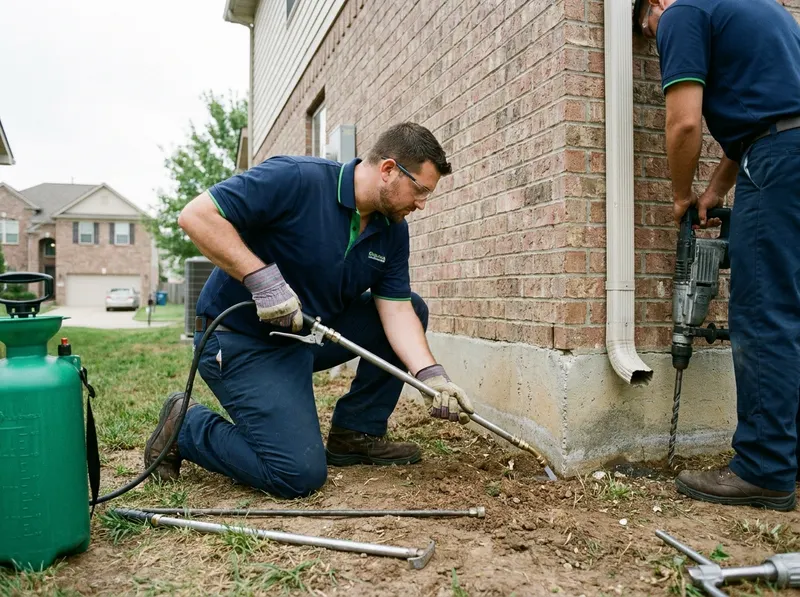
Subterranean termite soil treatments establish a terminal subterranean barrier using non-repellent liquid termiticides such as fipronil or imidacloprid. Unlike repellent barriers that termites simply detect and avoid, non-repellent chemistries allow subterranean termites to walk through the treated continuous zone unnoticed. The active agent binds to the cuticles of foraging workers and transfers back to the central subterranean colony through mutual grooming (trophallaxis), eradicating the queen and entire colony within 30 to 90 days. This intervention addresses structural property threats caused by native subterranean termites (Reticulitermes flavipes) and invasive Formosan subterranean termites (Coptotermes formosanus), which build mud tubes across concrete footings to consume structural cellulose.
The soil hydrology of Ouachita Parish directly dictates the deployment strategy. In high-water-table areas adjacent to the Ouachita River, Chauvin, and Bawcomville, heavy alluvial silt and saturated soils can dilute non-bonded topical applications. The application standard requires continuous mechanical trenching measuring 6 inches wide by 6 inches deep immediately adjacent to the exterior foundation walls, followed by pressure-rodding the liquid down to the top of the footing at an application rate of 4 gallons per 10 linear feet per foot of depth. In older pier-and-beam properties throughout the Garden District and Downtown Monroe, access beneath crawlspaces allows direct perimeter trenching around every supporting pier brick and chimney base. Conversely, monolithic slab residences built in Claiborne, Lakeshore, Swartz, and Brownsville require targeted drilling through attached patio slabs, porches, and garage aprons every 12 inches to saturate the unexposed sub-slab gravel base.
Property owners evaluating subterranean termite protection must weigh continuous liquid chemical barriers against selective bait station monitoring systems. A liquid barrier delivers immediate, total structural isolation: it treats 100% of the exterior ground entry points simultaneously and remains active in the soil for 5 to 10 years without relying on insect feeding preferences. The trade-off is mechanical disruption, as liquid barriers demand concrete drilling across attached walkways, driveways, and carports to guarantee an unbroken treatment line. In contrast, baiting stations require zero masonry alteration but introduce a delayed reaction time, leaving hidden mud tunnels active behind drywall while waiting for foraging worker termites to discover the bait matrix.
Every job gets a firm, written price after a free on-site visit.
Tell us about your subterranean termite soil treatment & liquid barriers job in Lubbock and we'll send a clear, written quote, usually the same day.
 Draxora Pest Care