Mosquito suppression in Ouachita Parish requires strict environmental control protocols due to the proximity of dense water systems. Properties situated along the Ouachita River, Bayou DeSiard, and the perimeter of…
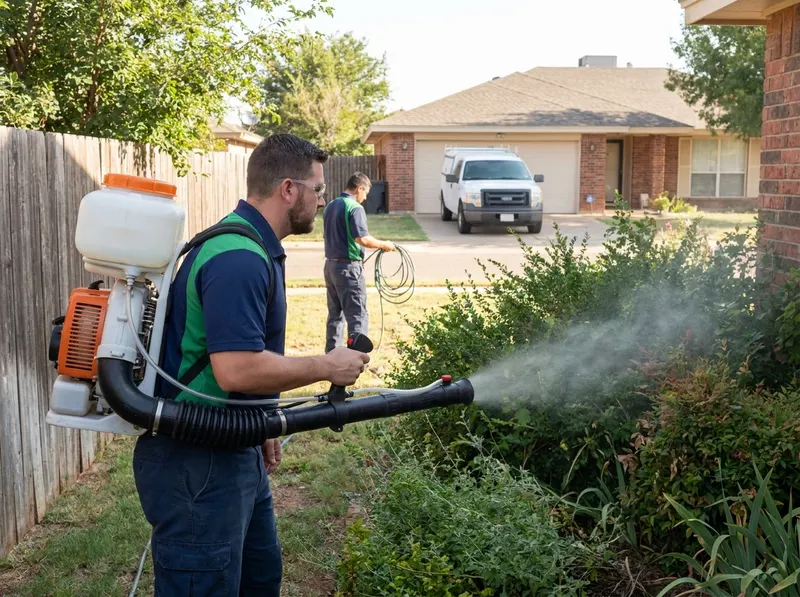
Mosquito suppression in Ouachita Parish requires strict environmental control protocols due to the proximity of dense water systems. Properties situated along the Ouachita River, Bayou DeSiard, and the perimeter of Black Bayou Lake National Wildlife Refuge experience intense humidity and rapid egg-to-adult incubation cycles, which can take as few as 7 to 10 days during summer peaks. Routine misting is calibrated specifically to target the underside of broad-leaf vegetation, beneath raised decking, and across structural soffits where adult populations harbor during daylight hours. This approach establishes a microencapsulated chemical perimeter that stops adults on contact rather than scattering them toward adjacent outdoor living spaces.
Decision factors dictate distinct tactical deployments based on ground saturation and drainage topography. When addressing standard suburban parcels in the Garden District, Claiborne, or Lakeshore, automated ultra-low-volume (ULV) mist suppressors and backpack air-assist blowers deliver 50-micron droplet barriers across shaded perimeter fences. Conversely, for large parcels or properties with recurrent pooling in Bawcomville, Brownsville, Swartz, or low-lying parcels near Chauvin, chemical surface mists alone are insufficient; sustained mitigation requires targeted BTI microbial larvicide briquettes placed directly into retention swales, ditches, and non-draining garden catch-basins to disrupt the pupation cycle.
Perimeter treatment execution follows a rigid three-step scientific protocol:
1. Technicians conduct an initial hydraulic inspection, charting drainage grades, standing pooling points, and air circulation corridors across the lot.
2. BTI biological rings are manually placed in non-potable static water reservoirs, interrupting the larval emergence sequence without threatening soil biology.
3. Technicians apply a microencapsulated residual barrier spray to the lower 10 feet of dense foliage, dense shrub borders, and foundation perimeters, creating an active kill-zone that withstands repeated precipitation.
Operational limitations apply depending on site hydrology and prevailing atmospheric conditions. High-wind thresholds exceeding 10 miles per hour trigger automatic rescheduling to eliminate off-target atmospheric drift, preserving local pollinator populations. Misting protocols strictly avoid open fish ponds, vegetable gardens, and active hives. In properties adjacent to Chennault Aviation and Military Museum, the University of Louisiana at Monroe campus, or Forsythe Park, suppression strategies account for public stormwater flow easements, ensuring that liquid barriers bond completely to structural and leaf surfaces rather than washing into urban runoff channels.
Every job gets a firm, written price after a free on-site visit.
Tell us about your mosquito reduction & exterior mist suppression job in Lubbock and we'll send a clear, written quote, usually the same day.
 Draxora Pest Care